You promised, so it is on you
how to manage expectations before they manage you
 In March 2024, having finished building a new product, I went on holiday for a month. Coming back, I expected the guys to have launched it. And yes, everything was fine, of course. Not really.
On the first day our CEO told me in full detail who was to blame, and also what should be torn off those people and where it should be inserted. Vadichka got the most of it — he was responsible for the product launch.
On top of the failed launch, Vadichka had become touchy and jumpy. He did not do what people asked of him: he promised a lot, but kept telling everyone "tomorrow" or forgot about the promise entirely.
I came to him and asked: what is going on here?
Vadik started making excuses and complaining:
— Misha, everyone is driving me insane. So much has piled on me right now. I am already working overtime all the time. Everybody wants something from me from every side. I understand that I promised. But I can't keep up. Let them wait a bit. It will be done when it is done.
You can understand Vadik. Everything he said is right.
The only wrong thing is the order.
The right order is: first you deliver on every promise, then you complain.
The ideal performer
What does it mean to be an ideal performer? I would put it like this:
An ideal performer is someone who fully delivers what is expected of them.
And I believe that the duty of managing those expectations lies entirely with the performer.
Initial expectations
When Vadichka first joined, his job title was "Project manager". We had never had project managers in the company, and nobody had bothered to write down what being a project manager means.
Some people thought Vadik was the person who would be responsible for launching new products. Others thought Vadik now managed priorities in IT. And someone decided Vadik was a person you can hand jobs like: "Here, I jotted my thoughts down in three words, rewrite this and file a task for IT".
An ideal performer defines the boundaries of their responsibility when they take the job. And gives nobody a chance to expect anything beyond those boundaries.
Promises
People asked Vadik for something, he answered "sure", and then happily forgot about the promise. That is an excellent example of how not to do it.
Here is what Vadik should have learned in order to count as an ideal performer:
- Say no
Formally, a person who promised nobody anything is an ideal performer. Vadik should not overdo this, of course, or he will be fired for doing nothing. But a firm "no" is better than an unconvinced "yes" — it is honest towards the person asking. At least they get time to find somebody else to do the job instead of Vadik.
There is a great book about the need to say "No" — "Start with No".

- Give certainty
If Vadik decided to agree to do a job, he has to promise not just to do it, but to do it by a specific date.
Vadik also has to say clearly what exact result the asker can expect. Plain "it'll all be done" is too vague. What is "all"?
- Make realistic promises
Vadik has to be able to judge his own capacity. Promising is not enough, you also have to deliver. And if he has already promised a lot of things to a lot of people, promising more without thinking would be dishonest. Everyone is better off if Vadik turns the new job down.
- Not forget what he promised
The best way to forget nothing is to not try to remember. Vadik will have to build himself a system that simply does not let him forget anything.
How to build a productivity system
Everything below is taken from Maxim Dorofeev's books "Jedi Techniques" and "The Jedi Path".

I also wrote about these practices in more detail in my Course for sad seniors.
For two weeks after I came back from holiday I spent several hours a day with Vadik, helping him become an ideal performer. We organised his affairs in Singularity, but the choice of software is not critical — it was simply the program I was already using myself.
Here is a quick rundown of the practices Vadik and I used.
Turn the notifications off
Any notification that pops up on your screen or makes a sound while you work has to be turned off.
Make exceptions only for the channels that genuinely require an immediate reaction. Vadik, for example, left the "Incidents chat" on — the place where people report that production is down.
Warn everyone concerned about it. Explain that you are doing it so you do not get distracted and get more done. Promise to check messages at least once every half hour. As a last resort leave them the option to call you if it really is urgent.
Notification settings differ for every messenger and every operating system. Getting it all right the first time may not be easy, but it is worth it — spend the time.
Collect every incoming thing in one place
When you decide to check your notifications, instead of answering messages or emails right away, first collect everything unread into a single list. Then sort it by urgency and process it one item after another.
You can put all your "must not forget X", "buy sausage", "want to read book Y" and startup ideas into the same list.
Go through that list several times a day. Turn some of it into tasks, move some of it to wherever you keep your shopping list, and some of it to the graveyard of startup ideas. Get the list to be empty by the end of the day.
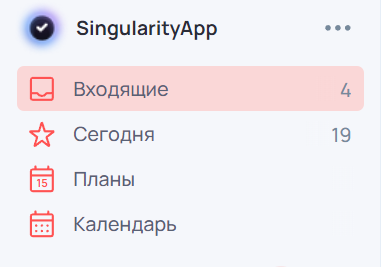
Singularity has a convenient place for such a list — Inbox.
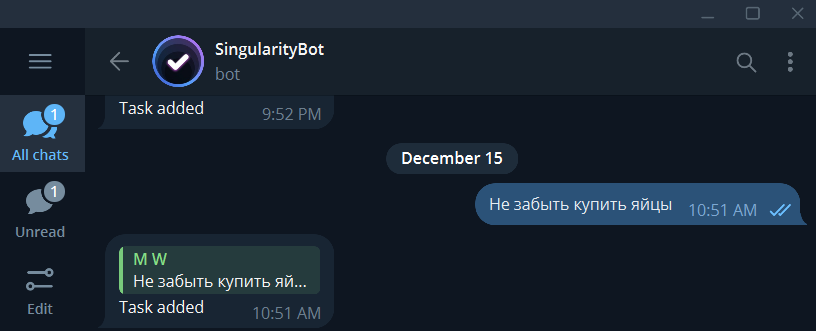
Connect the chat bot and set up forwarding of messages from Telegram straight into that list.
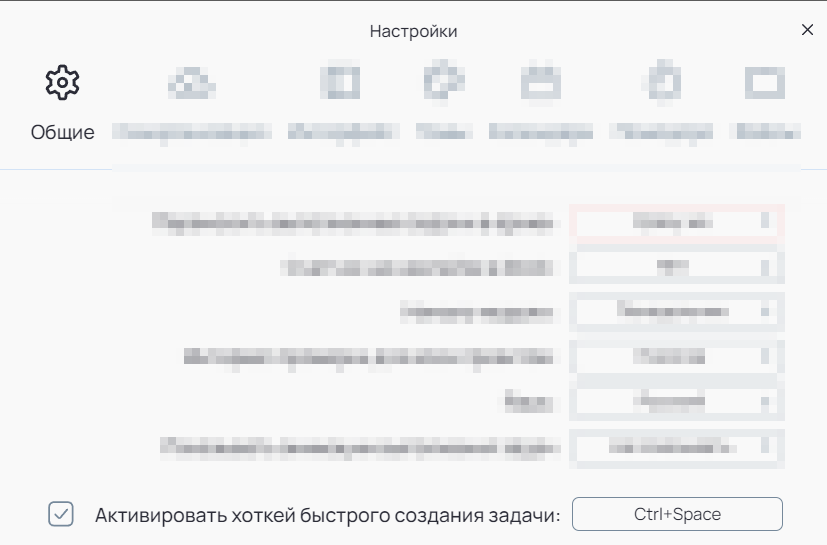
Set up a hotkey for quickly writing into that list from any application.
Work in intervals
When you decide to start on a job, do the following:
- Write down the first step you are going to take into the Today list in Singularity. Be as concrete as you can: "write a draft of the spec" instead of "file a task for IT", "write a test for module X" instead of "check that everything works", "go to the clinic website and book an appointment with the proctologist" instead of "a*s".
- Set the Pomodoro timer in Singularity to 20 minutes. Do that step and the logically connected steps that follow.
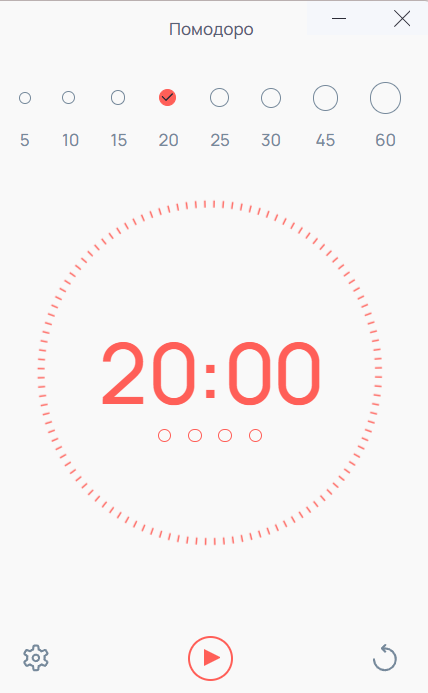
- When the time is up, a 5 minute break starts. Get up, stretch, take your mind off work. Check who wrote to you over the last 20 minutes and put it into the Inbox list.
- Decide whether you carry on with the current task by coming up with the next step for it, or switch to processing some new inbox item.
- Repeat.
The point of the practice is to let you sink into the work for 20 minutes without being distracted by anything. And only after those 20 minutes decide whether it is worth switching to something new.
Daily review
Before you close your working day, do the following:
- Process the inbox, get the list down to empty.
- Look through the tasks you planned for today but did not finish. Do you need to warn somebody, to renegotiate with somebody right now?
- Look through the archive of tasks finished today. Do you need to plan next steps, or are the tasks fully done?

- Plan for tomorrow what you absolutely have to do. Do not stuff it with things you "would like" to do — when there is nothing to do tomorrow, that is when you come up with them.
Conclusion
Within those two weeks the tension around Vadik started to drop. He did not turn into an ideal performer, of course, but at least he stopped letting down the people who counted on him.
Someone could say the ideal is unreachable, and I agree. Things happen, not everything we promise gets done on time. But we have to aim for the ideal, so that we have a chance of working with each other without resentment and false hopes.
Better to promise little and deliver for sure than promise a lot and say "I'll try".